

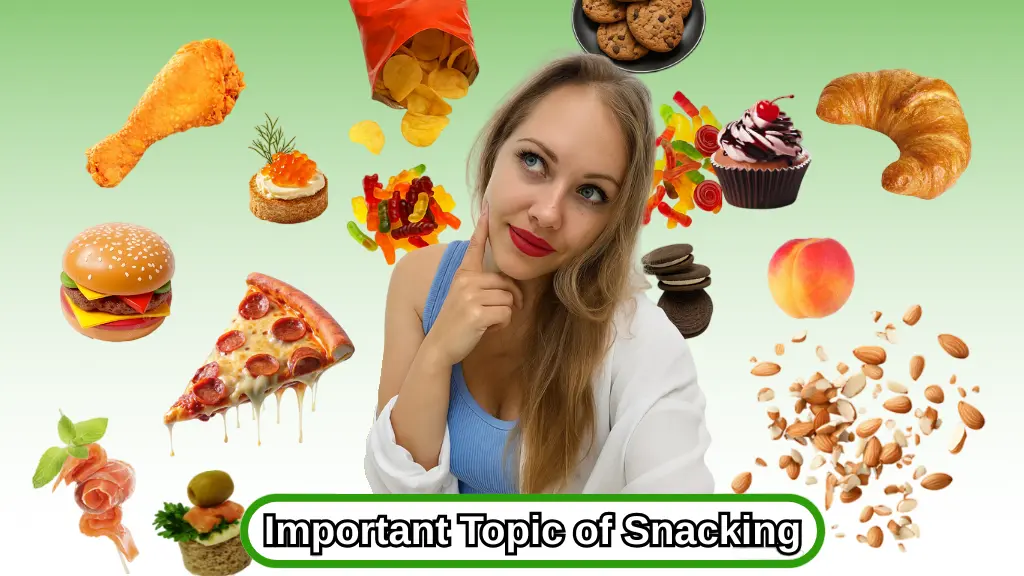
The Intriguing and Important Topic of Snacking
Are Snacks Ruining Your Diet? Snacking is a fascinating and significant Topic of Snacking in the realm of nutrition and diet. In an attempt to control their intake, people snack between meals, to gratify their appetite or just as a habit or company. Conversely, snacking raises the level of hunger and thus, snacking is an…
Are Snacks Ruining Your Diet?
Snacking is a fascinating and significant Topic of Snacking in the realm of nutrition and diet. In an attempt to control their intake, people snack between meals, to gratify their appetite or just as a habit or company. Conversely, snacking raises the level of hunger and thus, snacking is an ultimate cause of overeating. We will figure out the reasons of snacking, its possible consequences, and some of the best tips to break down your snacking habit in this blog.
The role of snacking in a healthy diet is still a hotly debated topic [1]. In the view of a large number of people, snacking is the main reason for an increase in the intake of calories beyond the necessary amount. This, in effect, can weaken the process of weight management [2]. Still, the consequence of snacking varies a lot depending on what kind of food is eaten and when [3].
INFORMATIONAL NOTE:
This content is for informational and motivational purposes only. Before making significant changes to your diet, exercise routine, or lifestyle, please consult with a qualified professional (such as a doctor, nutritionist, or trainer).
Why Do People Snack? The Topic of Snacking
Not always snacking is due to hunger. Human beings take snacks in the middle of meals for different reasons such as to relieve stress, depression, or anxiety, or just for enjoyment. The social environment is a source of common snacking habits, where people snack to interact and bond with each other. Moreover, past food intake affects one’s desire for specific snacks. If you had been eating Doritos frequently, and suddenly you decided to eat Ben & Jerry’s ice cream, you might find yourself craving the first food more. This might lead to an excessive consumption of snacks and a loss of control over your snack intake.
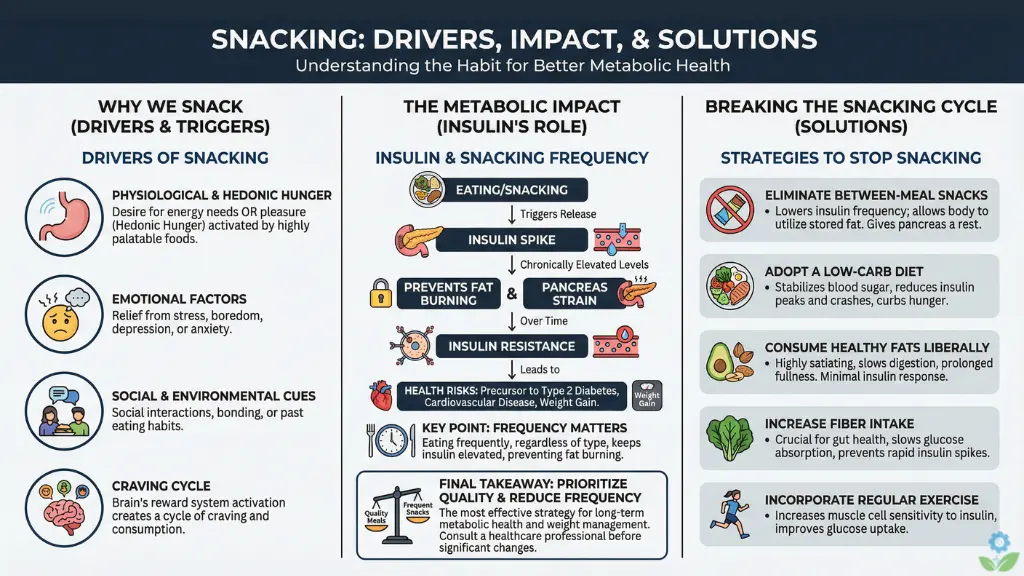
In most cases, the snack is a non-physiological factor. Such non-physiological factors are emotional eating, boredom, or social cues [4]. This is called hedonic hunger. It is the desire to eat for pleasure, not for energy needs [4]. Highly palatable foods activate the brain’s reward system. This leads to a cycle of craving and consuming [4].
Are Snacks Worse Than a High-Carbohydrate Diet?
Generally speaking, snacks are considered to be more harmful to health and weight control than a high-carbohydrate diet. My own point of view is that if I remove snacks from my diet, I will be able to lose weight and improve my health in general. Nevertheless, it is worthwhile to mention that this is only my viewpoint and may not be applicable to everyone. You maintain your diet but do not snack between meals. Please, take notice of your body’s reactions and determine if there are any changes to your appetite and general health condition.
This statement is a bit misleading and needs to be thoroughly explained. The comparison made between “snacks” and “high carbohydrate diet” is an oversimplification of the matter [5]. The problem isn’t just with the amount of carbohydrates. What matters most for metabolic health is the frequency of eating [1]. If you frequently snack, no matter what the macronutrient composition of your snacks is, you will keep insulin levels elevated. This will stop your body from being able to use fat as a source of energy [6]. You could be metabolically healthier on a high carbohydrate diet if you consume all your food within a short eating window than on a low-carb diet where you constantly snack [6].
The Influence of Insulin
One of the primary reasons that snack foods may be harmful is the effect they have on insulin levels in the Topic of Snacking. To keep sugar levels in the blood at a normal level, the hormone insulin comes into play. A snack will raise the insulin level, hence, the calories to be taken from the food will increase. Pancreas is the organ that produces insulin, so its production is going to be very high if snacks are consumed during the day regularly. Over time, this most probably will lead to insulin resistance. Insulin resistance is a condition where cells in the body become less sensitive to insulin and thus higher amounts of insulin in the blood are required. This can lead to overweight, among other things, ailment problems such as diabetes, cardiovascular diseases, etc., may also be the consequences.
Insulin is the primary hormone that controls blood glucose levels. To every meal, the body responds by releasing insulin [6]. Insulin levels are kept very high if one eats frequently, that is also in between meal snacking. The pancreas does not get its usual “rest” because it is still very active “working” [6]. This constant high demand is the main factor leading to the development of insulin resistance [1]. Insulin resistance is one of the main causes of Type 2 Diabetes and cardiovascular diseases. It is a very serious health issue [1]. Research addressing the number of daily meals suggests that having less than three meals a day might be a way to lower the risk of insulin resistance [1].
How to Stop Snacking

Ways to escape the snacking cycle and get your health back on track are several:
- Remove snacks from your diet, most importantly the ones you eat between meals. You will be giving your pancreas the opportunity to relax and therefore decrease insulin levels in your body. Eliminating between-meal eating is the most direct way to lower insulin frequency. This allows the body to utilize stored fat for energy [6].
- Change the diet to one that is low in carbohydrates. It is not only a good measure to lower insulin levels but also a way not to feel the need to eat snacks. A low-carbohydrate diet can help stabilize blood sugar. This reduces the sharp peaks and crashes that trigger hunger and cravings [7].
- Do not be afraid of fats; instead, consume them liberally but in a controlled manner. Fat remains in the stomach for a long time and hence, satiety is kept preventing the need for snacking. Dietary fat is highly satiating. It slows gastric emptying, which prolongs the feeling of fullness [8]. Beneficial fats are a must, like the ones in avocados and nuts. These are the types of fats that do not cause a major insulin response [8].
- Make more use of fiber in your daily meals. For example, consume green leafy vegetables as they provide a good amount of fiber and also help in blood glucose stabilization. Fiber, especially soluble fiber, is very important for the digestive system. Besides that, it helps in controlling blood sugar [9]. Fiber makes the process of glucose entering the blood vessels slower. Therefore, it avoids quick insulin spikes after eating [9].
- Eat more oily foods together rather than separately. For instance, by spreading olive oil over the salad and consuming celery with peanut butter, we are providing our body with what it needs thus helping to reduce insulin resistance. By mixing good fats with your meals you not only help the body to absorb nutrients better but also increase the feeling of fullness to the maximum [8]. Using this method is a step towards more balanced and longer-lasting energy which, as a result, leads to the natural reduction of snack cravings [8].
- Make time for physical activities in your daily schedule. Exercise is a good way to solve insulin resistance problems as well as to keep oneself healthy. One of the best weapons physically inactive people can have against insulin resistance is to introduce physical activity in their lives. This is because it raises the sensitivity of muscle cells to insulin [10]. Therefore, it is worth mentioning that even a few minutes of physical activity can stimulate glucose uptake to a great extent. Consequently, this will make sugar removal from the blood flow much quicker [10].
Additional Considerations
It may be helpful to understand that a few people can have low blood sugar levels, which can be a cause of snacking. Nevertheless, grabbing a snack if blood sugar is low only continues the interactive cycle. In order to handle blood sugar in an effective way, it is very important to lower one’s carb intake and also to follow the recommendations given. Besides that, some vitamins and minerals such as B1, potassium, chromium, zinc, magnesium, and vitamin D are good for insulin regulation and general health.
Hypoglycemia (low blood sugar) is one of the symptoms that may signal an underlying issue with insulin dysregulation. People who snack to fix their hypoglycemia are only providing themselves a temporary solution [6]. Ultimately, the problem of blood sugar stabilization has to be solved. The main idea of this is accomplished through nutrition and lesser meal frequency [6]. Micronutrients such as Magnesium, Chromium, and Vitamin D are cofactors. They are indispensable for the most efficient insulin signaling and glucose metabolism [11].
Conclusion
Briefly speaking, snacking can negatively influence your health and set back your weight management efforts. Getting rid of snacks, following a low-carb diet, eating healthy fats and fiber, and doing regular exercise will help you to come out of the snacking loop and, besides, to your general wellness, they will increase. Also, it is not the same solution for everybody. Hence, prior to any substantial modification in your diet or physical activity, you should definitely get a consultation from a healthcare professional.
The message to take home is to put first the quality of meals and cut down on the number of times you eat. This strategy is by far the best one for metabolic health [1][6]. One way of doing this is by controlling the insulin response, thus you can dismantle the craving loop. As a result, weight management becomes sustainable, and your health gets better.
Even more useful information about healthy eating — read it here!
References
- Impact of Meal Frequency on Insulin Resistance in Middle-Aged and Older Adults. H. E. Ryu, et al. (2024). Nutrients. [URL: https://pmc.ncbi.nlm.nih.gov/articles/PMC11960205/]
- Snacking, meal frequency, and energy intake: A systematic review. A. Andres, et al. (2024 ). USDA Nutrition Evidence Systematic Review. [URL: https://www.ncbi.nlm.nih.gov/books/NBK610958/]
- Snack Food, Satiety, and Weight. V. Y. Njike, et al. (2016 ). Advances in Nutrition. [URL: https://pubmed.ncbi.nlm.nih.gov/27633103/]
- Hedonic Hunger: A New Dimension of Appetite. A. M. H. Al-Bayyari, et al. (2025 ). Appetite. [URL: https://www.sciencedirect.com/science/article/pii/S2667368125000567]
- Meal-specific dietary patterns and biomarkers of insulin resistance. A. Lesani, et al. (2023 ). Scientific Reports. [URL: https://www.nature.com/articles/s41598-023-34235-3]
- The Influence of Meal Frequency and Timing on Health in Humans. A. Paoli, et al. (2019 ). Nutrients. [URL: https://pubmed.ncbi.nlm.nih.gov/30925707/]
- The Effectiveness of Low-Carb Diet vs Low-Fat Diet on Body Composition in People with Obesity: A Literature Review. E. P. G. S. T. R. S. (2022 ). AMNT. [URL: https://e-journal.unair.ac.id/AMNT/article/download/43282/28096%5D]
- Effects of high-protein vs. high-fat snacks on appetite control. L. C. Ortinau, et al. (2014 ). Appetite. [URL: https://pmc.ncbi.nlm.nih.gov/articles/PMC4190484/]
- Dietary fibre and incidence of type 2 diabetes in eight European countries: the EPIC-InterAct Study and a meta-analysis of prospective studies. (2015). [URL: https://pmc.ncbi.nlm.nih.gov/articles/PMC4472947/]
- Exercise and insulin sensitivity: a review. R. J. L. S. H. K. (2019 ). Diabetes Care. [URL: https://diabetesjournals.org/care/article/42/8/1604/36224/Erratum-Should-Viscous-Fiber-Supplements-Be]
- Micronutrient deficiency, a novel nutritional risk factor for insulin resistance and Syndrom X. Ekpenyong, C. E. (2018). Archives of Food and Nutritional Science [URL: https://www.foodscijournal.com/index.php/afns/article/view/afns-aid1013]


