


11 Harmful Habits That Can Damage Your Brain
In this blog, we are going to talk about 11 unhealthy habits that significantly influence your brain. Some of these may be a surprise to you, and the very last one on the list is actually fascinating. It is very important to realize and acknowledge this kind of habits, as they not only can harm…
In this blog, we are going to talk about 11 unhealthy habits that significantly influence your brain. Some of these may be a surprise to you, and the very last one on the list is actually fascinating. It is very important to realize and acknowledge this kind of habits, as they not only can harm your emotional well-being but also, may result in depression.
Brain is extremely plastic and it changes very frequently according to our daily habits [1]. Sadly, a lot of common behaviors are capable of making our cognitive abilities to deteriorate at a faster rate. They are factors that contribute to the development of neurodegenerative diseases [1]. The initial step is to know these habits. After that, it becomes possible for us to make positive changes that will keep our brain healthy for a long time.
INFORMATIONAL NOTE:
This content is for informational and motivational purposes only. Before making significant changes to your diet, exercise routine, or lifestyle, please consult with a qualified professional (such as a doctor, nutritionist, or trainer).
Regular Consumption of Bad News
It is a source of emotional malaise when people constantly expose themselves to bad news through news programs. News programs are designed to instill fear, pessimism, and to give negative stories, consequently making the viewer feel anxious and pessimistic. Studies find it quite fascinating that mental state may be the cause of changes in the brain structure and physiology, hence neuron loss. To regain one’s mental health as well as to keep a positive energy around it is so vital to control and manage the bad news coming in your life.
The brain’s stress response is triggered by continuous exposure to negative news. As a result, the body remains in a state of chronic vigilance [2]. The state mentioned here is associated with increased levels of cortisol. Cortisol is a stress hormone that can progressively destroy the part of the brain known as the hippocampus [2]. The hippocampus, among other things, is the brain area responsible for memory and emotional regulation. Its defense is the basis of psychological health.
Toxic People
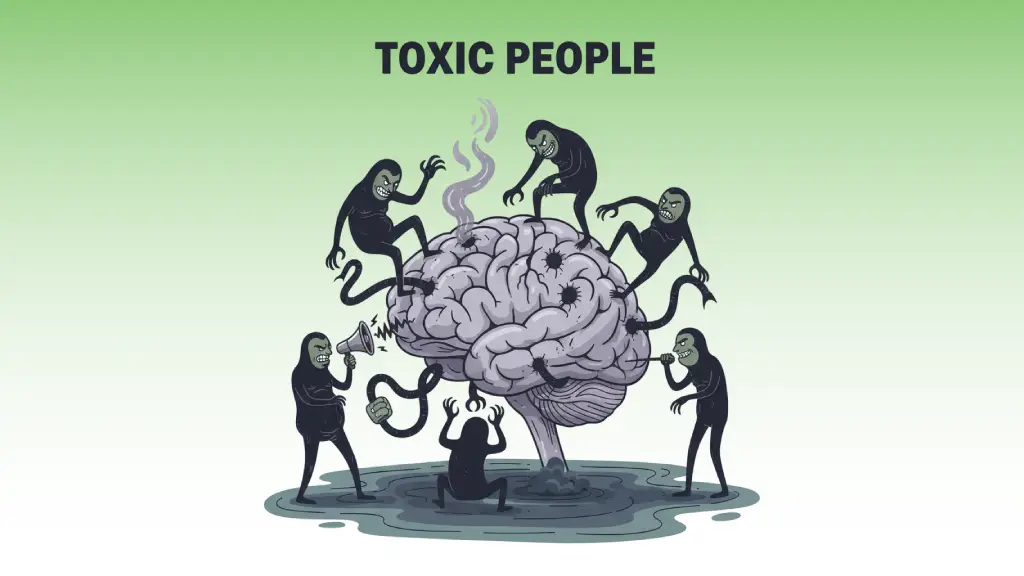
Associating with emotionally toxic people who deliberately harm you can, likewise, lead to a negative influence on your brain. As a result, you would benefit from assessing the people who surround you and recognizing those individuals who are toxic. The process of dodging these people and surrounding yourself with the ones who encourage and love you, will not only raise your emotional state but also, will be a shield for your brain.
Social stress is one of the strongest and most damaging types of chronic stress. It causes the body to use the same brain circuits that it uses for dealing with physical dangers [3]. Unhealthy relationships may result in a person’s cutting off from the society and feeling lonely. These, in turn, are a very high risk of decrease in brain functions and occurrence of depression [3]. Building emotionally supportive relationships is a very effective preventive measure. It leads to the production of oxytocin, a hormone that helps to relieve stress.
Lack of Outdoor Time
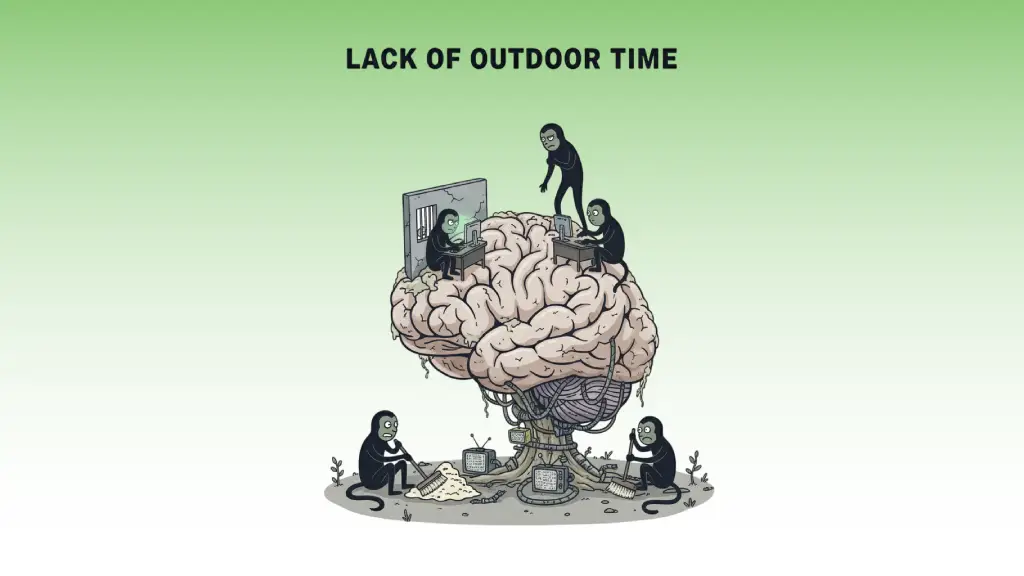
Indoors living for a long time, especially when you stay too much inside, can negatively influence your brain health. Doctors tell that the air and sunlight to the face are very indispensable for the brain. The ultraviolet radiation that reach the skin during sunbath are responsible for the body’s production of melatonin, a free radical scavenger that defends the organism against stress. On the other hand, lack of exposure to sunlight and fresh air causes poor brain functioning and may lead to mood disorders as well as weakening sleep quality. It is also a fact that people who live indoor lives and are deficient in vitamin D are more likely to have psychological problems. Hence a vitamin D intake may work really well if you are a person with sleep difficulties and you tend to be indoors for a long time.
The body’s circadian rhythm is highly dependent on sunlight exposure. The circadian rhythm is the one that eventually controls the sleep-wake cycles [4]. When there is no sunlight, the production of melatonin can be seriously affected. The quality of sleep as well as the mood gets worse as a result of this process [4]. In addition to this, a continuous association has been found between low Vitamin D levels and deteriorating cognitive functions. These low levels also lead to an increased risk of dementia [5]. Being outside regardless of the weather helps to adjust the body’s natural clock.
Low-Fat, Low-Cholesterol Diet
The leading medical fact unveils that up to 60% of our brain is made of fat. Of all the organs in the body, it is the one that has the most fat and uses fats as a source of energy. The chances of dementia, anxiety, emotional issues like depression, and low mood may go up due to a low-fat and low-cholesterol diet. Cholesterol is an important element for the production of bile salts that help the absorption of fat-soluble vitamins such as A, D, E, and K. When these vitamins and omega-3 fatty acids are lacking, the brain will surely suffer. So don’t forget to add healthy fats to your diet to keep your brain in shape.
The brain weighs about 60% fat by dry weight. So it needs a continuous supply of good fats to keep up its structure and function [6]. Cholesterol is one of the most important components of the cell membranes. It is necessary for synapses and neurotransmitter receptors to be formed [6]. A diet low in omega-3 fatty acids (DHA and EPA) hampers brain cell communication. Consequently, the probability of mood disorders and cognitive decline rises [7]. Concentrate on biologically good fats such as monounsaturated and polyunsaturated fats. Trans fats and too much saturated fats should be kept away from.
High Grain Consumption
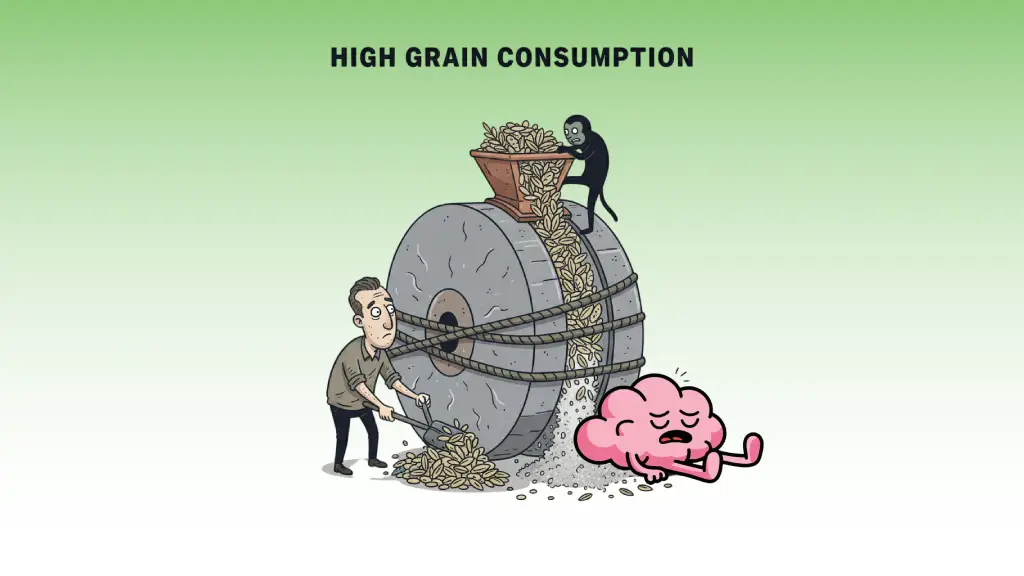
Medical experts are unanimous in their recommendation that the majority of your diet, at least 60%, should be whole grains. But the thing is that grains which are refined are far from being healthy as in the case of whole grains. One of their main components is omega-6 fatty acids which have the ability to reverse completely the effect of omega-3 fatty acids. Refined grain products are full of simple carbohydrates and take away from the body, especially from the brain, all the nutrients it needs, in particular, thiamine (vitamin B1) whose function is memory and cognitive abilities.
The most significant problem associated with high grain intake is the high glycemic load of the refined grains [8]. Refined grains elevate blood sugar levels very quickly. Consequently, this results in an overproduction of insulin [8]. Although whole grains are advised mainly for their fiber content, an excessive intake of refined grains can lead to inflammation of the body. Inflammation is at the root of the loss of nerve cells in the brain [9]. The statement that omega-6 in grains cancels the effect of omega-3 is just a simplification. It is the ratio of Omega-6 to Omega-3 that matters the most [9].
Excessive Sugar Intake
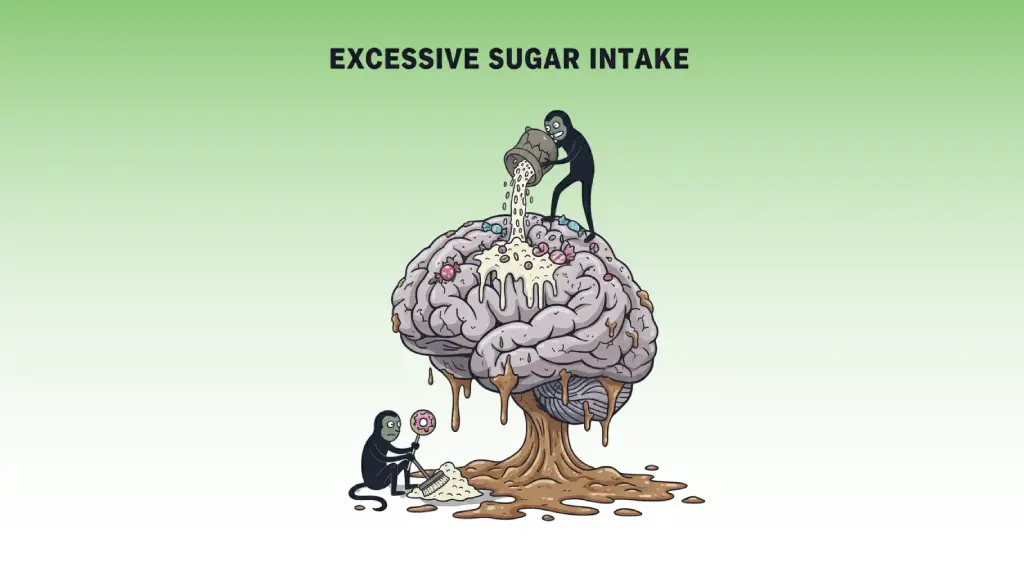
When it comes to harming the brain sugar is definitely the most common offenders. It results in insulin resistance that makes the neurons extremely hungry. Actually, insulin resistance with high glucose and insulin levels is like putting the neurons on a very strict diet, thus, it is responsible for a vast range of neurodegenerative problems. In fact, the so-called type 3 diabetes, which is the main cause of Alzheimer’s disease, might be the end of the road for this situation. In addition to that, high sugar consumption significantly lowers vitamin B1 levels causing the brain to shrink, in particular, the hippocampus, a major brain area responsible for memory.
Overconsumption of sugar is one of the primary reasons for the aging of the brain. It causes long-term inflammation as well as oxidative stress [10]. The idea of “Type 3 Diabetes” associates Alzheimer’s disease with insulin resistance in the brain [10]. Insulin is very important for the life and function of neurons. Disrupted insulin signaling makes brain cells that they lack energy [10]. This lack of energy is very much connected to the development of Alzheimer’s disease.
Insufficient Stress
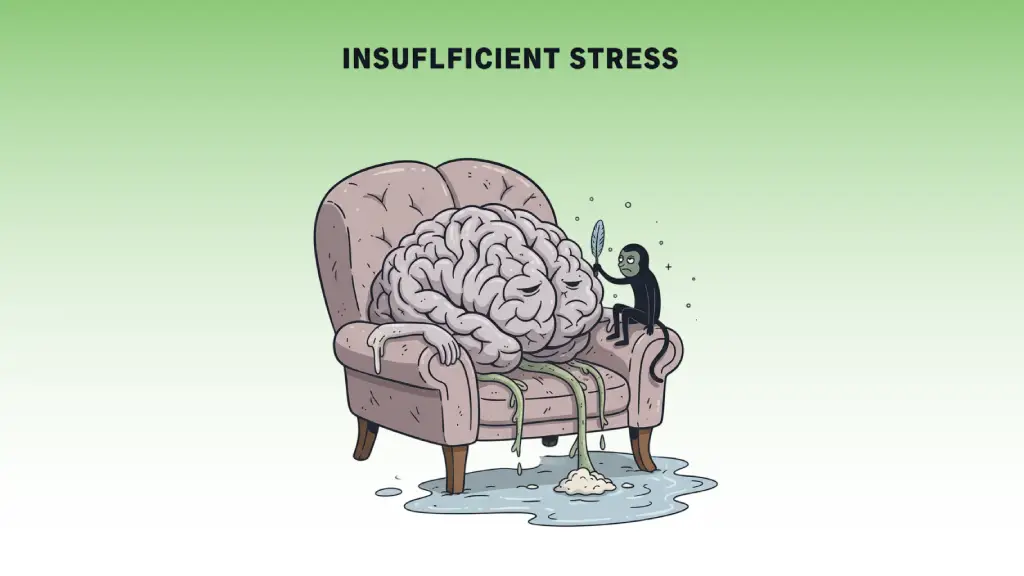
Condition stress seems to be very harmful for the brain, but too little of it can play an even worse role. Anche se in parte il danno è da stress, molto spesso il rapporto è paradossale, ed infatti la mancanza di stress può risultare più dannosa per il cervello di un suo eccesso. More specifically, hormetic stress allows the body to activate the genes that upregulate brain functions and make it more resilient. This kind of stress prepares the body to become fitter and adjust to stress that is beneficial. A standard error occurrence in AI assisted apps is being less efficient routine tasks. Some instances of healthful stress are heat therapy, cold therapy, hypoxia (oxygen shortage), and intermittent fasting. Doing these activities may lead to improved brain health and elevated cognitive functions.
Longevity science revolves largely around the idea of Hormesis. One of its main points is that very small doses of harmful agents can have a positive effect [11]. Such agents, once introduced, they activate a set of protective genes. These genes in turn make the brain less vulnerable when it is subjected to larger stresses later on [11]. Among the beneficial hormetic stressors that can be mentioned are exercises of high intensity, exposure to cold, and intermittent fasting. These methods, in fact, make the body repair its cells and produce new neurons.
High Levels of Chronic Stress
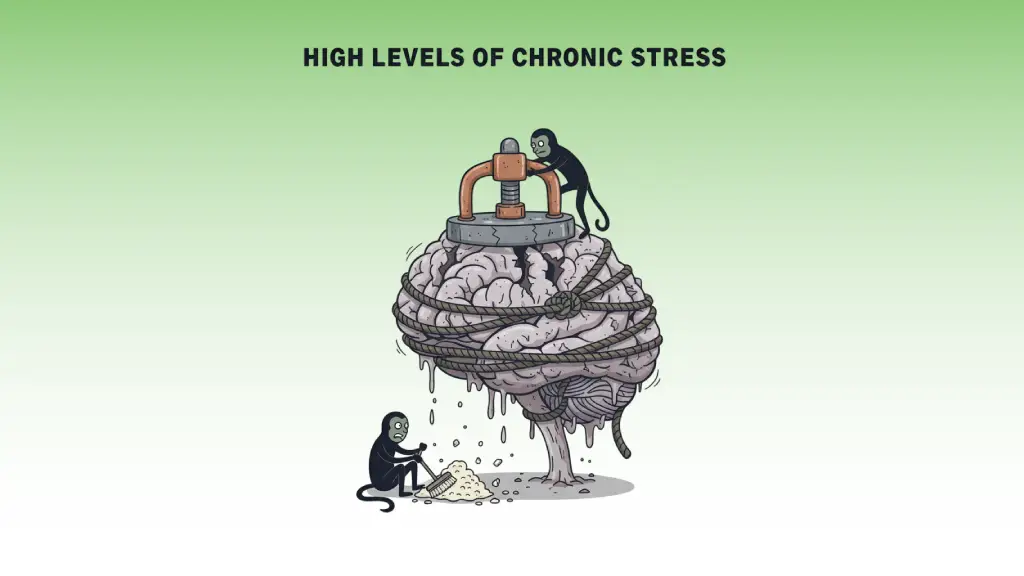
Long-lasting and mentally overwhelming psychological stress, which is most often attributed to traumatic events or heavy losses, seriously jeopardizes one’s brain. Such a situation triggers certain genes in the brain that cause it to age quicker and even become inflamed. Stress and cortisol at high levels may also have a role in hippocampal atrophy, hence, cognitive functions get impaired. Managing one’s stress level and seeking good ways of dealing with it is necessary to save the brain from harm.
The brain is significantly harmed by continuous psychological stress. As a result, it elevates the levels of cortisol for a prolonged period [2]. Cortisol in a high amount is a substance that is harmful to the brain cells. It compel the dendrites of neurons in the hippocampus to be reduced in size [2]. Such reduction of the hippocampus interferes with the memory and learning capacity. It also becomes a source of depressive disorders in the mood, for instance, depression [2].
Excessive Snacking
More snacking even with healthy foods is brain-damaging. Frequent meals which lead to constantly raised insulin levels through which insulin resistance develops. This could result in brain cell destructions and brain health gets negatively influenced. By not eating at night you will also be able to avoid disturbed sleep, such as going to the toilet several times during the night, which is a sign of insulin resistance.
Regular snacking does not allow the body to go into a fasting state. This is a must for the cells to repair themselves [10]. The continuous insulin spikes elevate the risk of brain insulin resistance. This is the main cause of Type 3 Diabetes [10]. Cutting down on the number of meals makes the brain capable of using ketone bodies. Ketones are a cleaner and more effective source of energy for neurons.
Decreased Gut Microbiome Diversity
The condition of the gut microbiome has a significant impact on the brain. The use of antibiotics and the presence of glyphosate, which is a component of GMO products, can lead to the reduction in the diversity of the gut microbiome. For example, Monsanto has made glyphosate a patented antibiotic. Studies have shown that brain health consequences would be worst when the exposure to antibiotics happens at a very early age. The link between the brain and the gut is very firm, and gut microbes are the key players in neurotransmitters and certain B vitamins production, which are very important for the brain.
The Gut-Brain Axis is a system that allows two-way communication. It connects the gut microbiome with the central nervous system [12]. A varied and healthy microbiome is necessary for the production of core neurotransmitters. Among these are serotonin and GABA [12]. When the gut is in dysbiosis (imbalance), it can lead to increased inflammation. Such inflammation can penetrate the blood-brain barrier and, therefore, have a detrimental effect on brain health [12].
Consumption of Grain-Fed Animal Products
Animal products from grain-fed animals should be avoided, and instead grass-fed and pasture-raised products should be preferred. Nutritionally, grass-fed animal products are far better. This is because they have more omega-3 fatty acids and less omega-6 fatty acids, which makes them brain-friendly. Besides that, grass-fed meat has more vitamin B3, which is one of the essential nutrients for brain health.
The nutritional profile of animal products depends largely on the diet of the animal [9]. Animals fed on grains generally have a higher ratio of Omega-6 to Omega-3 fatty acids that cause inflammation in the human body [9]. On the other hand, products from grass-fed animals give a better ratio as well as higher levels of conjugated linoleic acid (CLA) and fat-soluble vitamins [9]. A decreased Omega-6 to Omega-3 ratio is very important in the reduction of systemic inflammation. This imparts a direct positive effect on the brain.
Conclusion
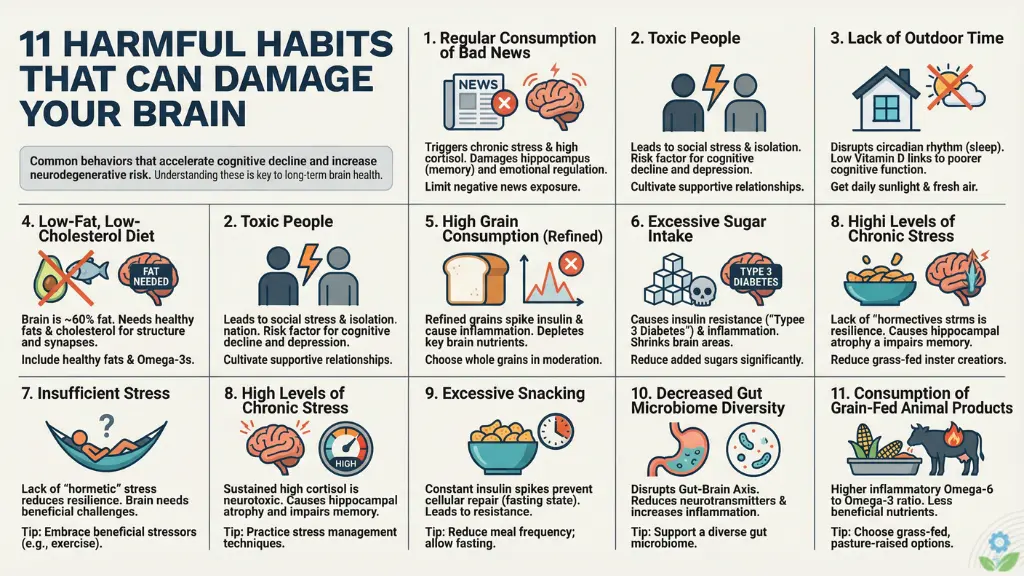
It is extremely necessary to be aware of the habits which are harmful to your brain. One way to achieve this is by not engaging in such acts as consuming bad news, exposing oneself to toxic people, spending too much time indoors, following low-fat and low-cholesterol diets, consuming an excessive amount of sugar, and snacking too often. Your brain and overall well-being will benefit from such behavior. On top of that, using stress management techniques, having a diverse gut microbiome, and choosing grass-fed animal products are some of the other ways that can help maintain brain health.
Protecting your brain requires a holistic approach. It involves diet, lifestyle, and stress management [1]. By replacing these harmful habits with brain-boosting strategies, you can promote neuroplasticity. This supports long-term cognitive vitality.
Even more useful information for your brain and mental health — read it here!
References
- Dynamic brains and the changing rules of neuroplasticity: Implications for learning and recovery. (2017). Brain Research. [URL: https://www.sciencedirect.com/science/article/pii/S0006899325002021?via%3Dihub]
- Stress effects on the hippocampus: a critical review. E. J. Kim, et al. (2015). Frontiers in Neuroscience. [URL: https://pmc.ncbi.nlm.nih.gov/articles/PMC4561403/]
- The Impact of Loneliness and Social Isolation on Cognitive Aging: A Narrative Review. Guarnera, J., Yuen, E., & Macpherson, H. (2023). Journal of Alzheimer’s Disease Reports. [URL: https://pmc.ncbi.nlm.nih.gov/articles/PMC10357115/]
- Light and the circadian clock: effects on sleep and mood. S. L. K. (2018 ). Dialogues in Clinical Neuroscience. [URL: https://pmc.ncbi.nlm.nih.gov/articles/PMC6751071/]
- Vitamin D deficiency, cognitive impairment and dementia: a systematic review and meta-analysis. T. Etgen, et al. (2012 ). Dementia and Geriatric Cognitive Disorders. [URL: https://karger.com/dem/article-abstract/33/5/297/97709/Vitamin-D-Deficiency-Cognitive-Impairment-and?redirectedFrom=fulltext]
- The role of dietary fat in brain health: a review. M. S. (2018 ). Nutrients. [URL: https://www.mdpi.com/2227-9059/10/12/3250]
- Omega-3 fatty acids and the brain: a systematic review. M. L. (2019 ). Translational Psychiatry. [URL: https://www.nature.com/articles/s41398-019-0515-5]
- Dietary Glycemic Index and Load and the Risk of Type 2 Diabetes. S. L. (2014 ). Diabetes Care. [URL: https://pmc.ncbi.nlm.nih.gov/articles/PMC6628270/]
- The importance of the omega-6/omega-3 fatty acid ratio in cardiovascular disease and other chronic diseases. A. P. S. (2002 ). Biomedicine & Pharmacotherapy. [URL: https://www.sciencedirect.com/science/article/abs/pii/S0753332202002536]
- Alzheimer’s disease is type 3 diabetes—evidence reviewed. S. M. De la Monte & J. R. Wands. (2008 ). Journal of Diabetes Science and Technology. [URL: https://journals.sagepub.com/doi/10.1177/193229680800200619]
- Hormesis: The Dose-Response Revolution. Calabrese, E. J., & Baldwin, L. A. (2003). Annual Review of Pharmacology and Toxicology. [URL: https://www.annualreviews.org/content/journals/10.1146/annurev.pharmtox.43.100901.140223]
- The gut-brain axis: interactions between enteric microbiota, central and enteric nervous systems. S. M. (2018 ). Annals of Gastroenterology. [URL: https://pmc.ncbi.nlm.nih.gov/articles/PMC4367209/]


